

A typical medical practice marketing budget starts around 7 to 8% of gross revenue, a long-standing SBA guideline for small businesses under $5 million. However, a better method starts with your new patient goal and the value of each patient. Multiply the goal by your cost per new patient, then check it against the revenue guide.
“How much should we spend?” is usually the first marketing question a practice owner asks. Unfortunately, it often gets a vague answer. So this guide gives you two clear methods and a sample split you can adapt.
Method 1: a percentage of revenue
To begin with, the simplest rule ties spend to revenue. The US Small Business Administration has long suggested that small businesses under $5 million in sales spend 7 to 8% of gross revenue on marketing, assuming healthy margins. For example, a practice earning $2 million a year would budget roughly $140,000 to $160,000.
Admittedly, this rule is easy to apply. However, it ignores your goals, your market and your competition. That is why it works best as a sanity check.
Method 2: a medical practice marketing budget based on patient value
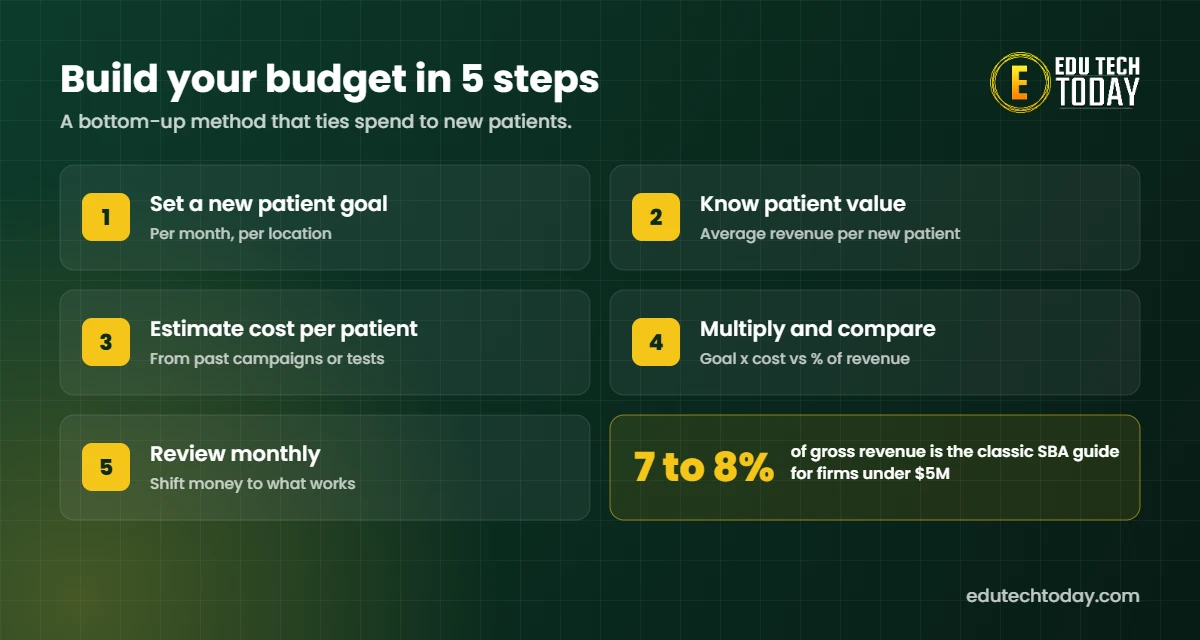
By contrast, this method starts from the outcome you want. First, set a monthly goal for new patients. Next, estimate the average revenue each new patient brings over a year. Then estimate what it costs to win one new patient from past campaigns. Finally, multiply the goal by that cost.
For example, 40 new patients a month at $150 each needs about $6,000 a month. Since each patient might be worth $900 a year, the return is clear. Consequently, you can defend the budget with real numbers.
A sample medical practice marketing budget split
| Area | Share | What it covers |
|---|---|---|
| Website and SEO | 30 to 40% | Pages, speed, content |
| Local and reviews | 15 to 20% | Google listing, reviews |
| Paid search | 25 to 35% | High-value services |
| Tracking and tools | 5 to 10% | Calls, forms, reports |
Of course, this split is a starting point, not a rule. For instance, a new practice may spend more on its website and listing at first.
What changes a medical practice marketing budget
- Competition: dense cities generally cost more than small towns, because more practices compete.
- Specialty: elective care, such as cosmetic work, also costs more per patient.
- Growth stage: similarly, new practices and new locations need more at launch.
- Capacity: if the schedule is full, then spend less until you add providers.
In-house or agency: where the budget goes
Besides channels, your budget also has to cover the people. For example, a full-time marketer is a large fixed cost. In contrast, an agency fee usually includes several specialists. We compare both in our guide on whether to outsource practice marketing.
Track the budget every month
First, review cost per new patient by channel each month. Then move money from weak channels to strong ones, because results differ by channel. To put budget, goals and channels in one place, use our medical practice marketing plan. For channel ideas, see 11 ways to get more patients.
Want help building the numbers? Our healthcare marketing team can model a budget for your practice, and you can compare our plans and pricing.
Frequently asked questions
How much should a medical practice spend on marketing?
A common starting point is 7 to 8% of gross revenue for practices under $5 million. However, a better method multiplies your monthly new patient goal by your cost per new patient.
What should a medical practice marketing budget include?
It should cover your website and SEO, Google Business Profile and reviews, any paid ads, tracking tools, and the people or agency doing the work.
Is 5% of revenue enough for practice marketing?
It can be for an established practice with steady demand. However, new practices, new locations and competitive specialties usually need more.
How do I measure return on my marketing budget?
Track new patient calls, forms and bookings by channel. Then compare the cost per new patient with the revenue each patient brings.
Should a small practice spend money on paid ads?
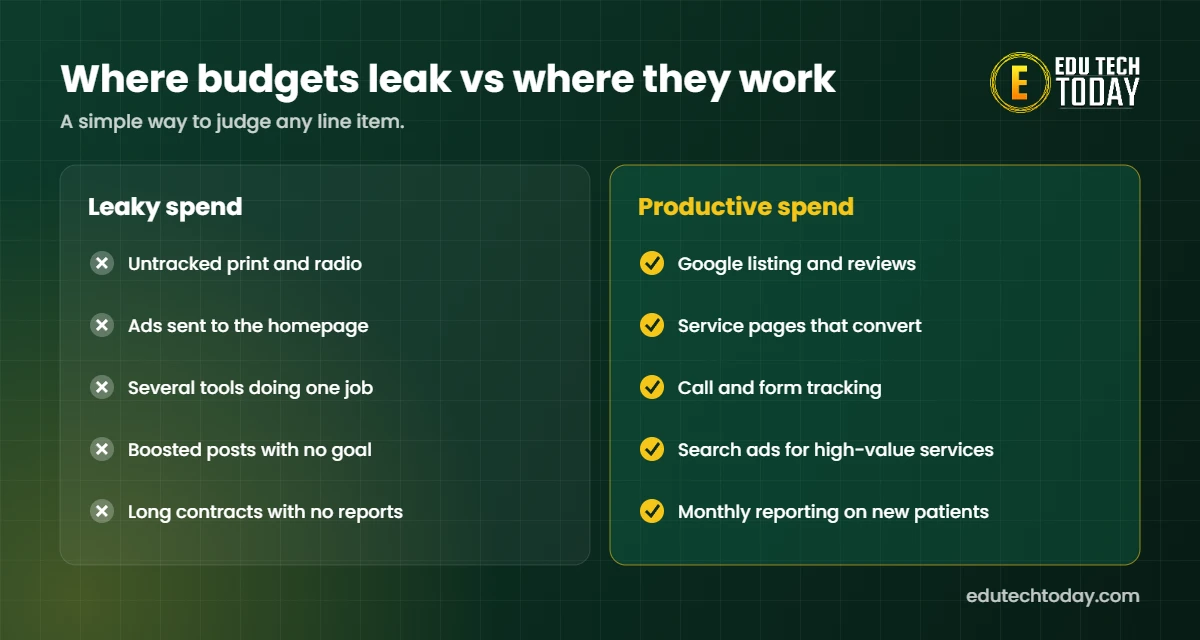
Only after the Google listing and website convert well. Otherwise, ads that send patients to a weak page waste budget.
Want a budget tied to real patient numbers? See how our medical practice marketing service works or book a free planning call.